
‘Odyssea Americana’ art exhibit opens at The Soil Factory Sept. 4
Photography, drawing, maps, calligraphy, installations and audio recordings depict a trip by three scholar-artists in honor of Odysseus’ epic voyage, but in North America.
 Department Homepage
The College of Arts & Sciences
Department Homepage
The College of Arts & Sciences
Photography, drawing, maps, calligraphy, installations and audio recordings depict a trip by three scholar-artists in honor of Odysseus’ epic voyage, but in North America.

Projects spanned topics from Confederate cemeteries to Korean textiles.
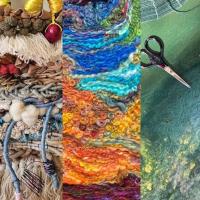
In times of uncertainty, art remains a powerful act of resilience. This May, Orozco Gallery will open its doors as a pop-up space for creativity, connection, and cultural celebration at 115 S Cayuga St, Downtown Ithaca. Featuring artist talks, live music, dance, and family-friendly events, the gallery invites people of all ages to come together…

Three short documentaries produced in a Rural Humanities Seminar, taught by PMA Associate Professor Austin Bunn, are headed to film festivals this fall.

Bitcoin mining consumes 2.3% of all U.S. electrical demand.


Coming from the University of Toronto, where he was the director of the Munk School of Global Affairs and Public Policy, Loewen began his five-year appointment as the Harold Tanner Dean of the College of Arts and Sciences Aug. 1.

Funding is available for faculty and students with projects related to rural humanities.

A trio of short films showing the pleasures – and perils – of rural life for LGBTQ+ people will show April 26 as part of the Rural Humanities Initiative in the College of Arts and Sciences.
In an essay as part of the RH Pamphlet Collection, 2023 Exemplary Project Grant recipient Alexandre Saint-Sauveur describes his experience as a research assistant to Gerard Aching, Professor of Africana and Romance Studies at Cornell University and Convener of the Underground Railroad Research Project.
Austin Bunn, professor in the department of Performing and Media Arts, has won Best LGBTQIA+ Short Award at the Cleveland International Film Festival (CIFF47) for his film "Campfire."
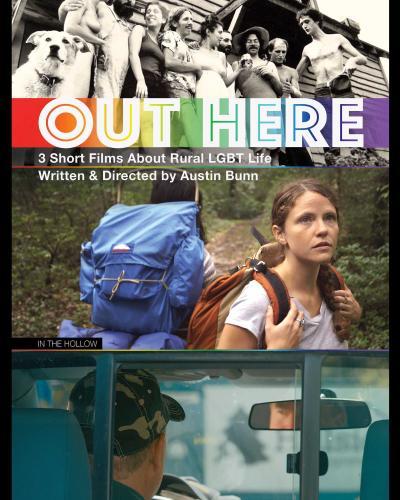
Out Here: 3 Short Films about Rural LGBT Life Written & Directed by PMA Associate Professor Austin Bunn With guests David Hirsch ("Lavender Hill"), Claudia Brenner ("In the Hollow"), and Wayne Mitteer ("Campfire") 5:30pm-7pm Cinemapolis Wednesday, April 4/26 Post-show reception at Moosewood This spring event, sponsored by Cornell's Rural Humanities Initiative, will feature three award-winning…
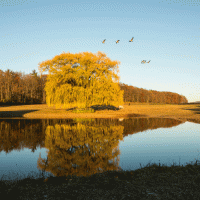
Applications are now open for the 2023 Rural Humanities Summer Practicum on the topic of "Rural Environments in Public Practice."
In an essay as part of the RH Pamphlet Collection, 2022 Exemplary Project Grant recipient Jessica Ness describes her experience delving into the history of the Seward family and their role in abolitionist politics. For a final project in the Rural Humanities Spring Seminar, Ness created a series of fictional letters between Frances Adeline Seward…
In an essay as part of the RH Pamphlet Collection, 2022 Exemplary Project Grant recipient Bushra Aumir (B. Arch student in the department of Architecture, Art and Planning) shares the details and context behind her art installation, an anti-monument, called Resolute.

A&S faculty will lead many courses on campus and join educational vacations as part of Cornell Adult University.

The 3-D tour focuses on the building, its foundation, the archaeological excavation underway and a Civil War monument on the church site.

On Cornell’s eighth Giving Day, held March 16, 15,905 alumni, students, faculty, staff, parents and friends from more than 80 countries made gifts totaling a record-breaking $12,268,629.

Gifts allow the College to fulfill its mission: preparing students to do the greatest good in the world.

The new “Voices on the Underground Railroad” website focuses on nine documented or rumored stops on the Underground Railroad in Central and Western New York.

Five essays that explore how students created publicly-engaged projects are available online.

The RH Pamphlet collection publishes graduate and undergraduate student essays written as part of either our Community Partnership or Exemplary Project grants.
In an essay as part of the RH Pamphlet Collection, 2021 Exemplary Project Grant recipient Ethan Dickerman (M.A student at the Cornell Institute for Archaeology & Material Studies) walks readers through the background and inspiration behind the Tompkins County Rural Black Residents (TCRBR) project, a digital humanities/public history website.

The program connects undergraduates in A&S with opportunities to work side by side on research with Cornell faculty from across the College.

Church members and a multidisciplinary team of Cornell faculty and students are learning more about St. James A.M.E. Zion Church by doing an archaeological dig.
In the following booklet, 2021 Exemplary Project Grant recipient Jehan Roberson (PhD candidate in Literatures in English) reflects on her experience crafting a fictional narrative for the Voices of the Underground Railroad website, an online collection of stories mapped on to documented and rumored underground railroad stations and safe houses in Central and Western New…
In this essay booklet, 2021 Community Partnership Grant recipient Lyrianne Gonzalez (History) details her oral history work with Black farmers in New York State. The project was developed during the 2021 Spring Seminar on Rural Black Lives.
In this iteration of our RH Pamphlet Collection, 2021 Exemplary Project Grant recipient Charline Jao (Literatures in English) reflects on the creation of her digital humanities website mapping the Free Produce movement, a project she developed during the 2021 Spring Seminar on Rural Black Lives.
In the first of our Grant Recipient essay series, 2020 Spring Seminar participant and Community Partnership Grant recipient Shaloni Pinto (ILR '20) writes of her summer working with the Poetic Justice project.

The Underground Railroad Project at St. James A.M.E. Zion Church, the Foodnet Meals on Wheels program, and Khuba International and the Learning Farm received collaboration awards for partnering with Cornell to improve the lives of Tompkins County residents.
The Nexus Scholars program will leverage the student-to-faculty ratio and the vibrant research enterprise in A&S to expand opportunities for students, while also enhancing the culture of collaborative scholarship at Cornell.

A collaboration between the Cornell Tree-Ring Laboratory and the New York State Museum in Albany has established a more precise timeline for some of the most iconic archeological sites in the Mohawk Valley.

This fall, the Center for Teaching Innovation (CTI) is coordinating a community of practice featuring workshops led by faculty to explore digital storytelling methods
A multidisciplinary team of Cornell students and faculty and local schoolchildren began an archeological dig Sept. 18 at St. James AME Zion church in Ithaca.

Research supported by the 14 grants ranges from the physics of quantum computing to the design of new musical instruments.

Rural Humanities will offer a webinar, “Black Land Matters: A Rural Humanities Webinar on Black Farming and Food Security,” on March 4, part of a conversation on Black land ownership, farming and food security.

Cornell music faculty are working with the Philadelphia Orchestra to bring to light the works of a historically erased composer.
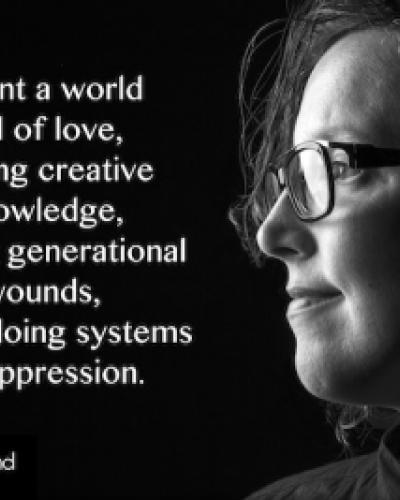
KAR Robison, a CALS junior majoring in environment and sustainability, passed away unexpectedly in December, 2020. They were 41. KAR was involved in several projects and was a participant in the Spring Seminar. In a memorial tribute to KAR, Gerard Aching reflects on their involvement in community projects and their commitment to social justice initiatives:
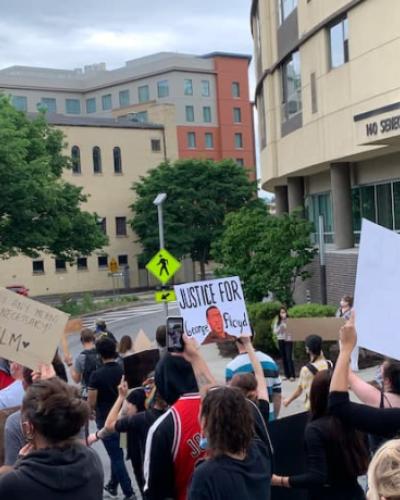
The first half of 2020 witnessed the brutal execution-style killing of George Floyd by law enforcement officials in Minneapolis; the same day in Central Park, a white dog owner called the police on an “African American male,” Christian Cooper, who was “threatening” her by simply asking her to leash her dog. Prior to these events,…
The Summer Practicum is being offered to allow graduate students and advanced undergraduates to deepen public and engaged humanities projects in our local region that they have begun or are adequately prepared to undertake during an intensive 6-week program.
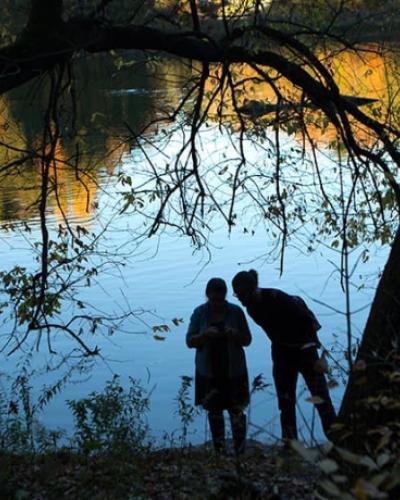
The complex dynamics between rural and urban life have profound implications for America’s future, from the economy to the environment and beyond.